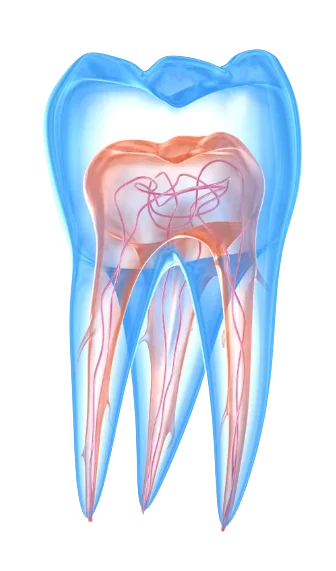
A root canal treatment, or endodontic treatment, is an essential procedure when the soft tissue (the pulp) in a tooth is inflamed or infected. This can happen due to deep cavities, a crack in the tooth, or trauma. The biggest advantage of this treatment is that your own natural tooth is preserved.
Instead of extracting the tooth, the dentist removes the inflamed pulp, cleans and disinfects the inside of the tooth, and then fills and seals it. This stops the infection and relieves the pain.
The main advantages are:
- Preserving your own tooth: This is the most sustainable and functional solution.
- Pain relief: The source of the pain and inflammation is eliminated.
- Preventing further infection: The treatment protects your jawbone and surrounding teeth.
- Preservation of chewing function and aesthetics: You can continue to eat and smile as you are accustomed to.
Modern techniques and equipment
Thanks to the latest techniques, root canal treatment is now more precise, effective, and comfortable than ever before.
- The microscope: Many dentists use a surgical microscope to obtain a highly magnified and illuminated image of the root canal. This makes it possible to locate and treat even the smallest canals, which significantly increases the chances of success.
- The electronic length meter: This advanced device measures the exact length of the root canal. This allows the dentist to accurately clean and fill the canals to the end of the root without damaging the surrounding tissues.
- The cofferdam (rubber dam): This is a rubber sheet that is placed over the tooth and shields the rest of the mouth. This ensures a dry and sterile working area, which is crucial to prevent saliva and bacteria from entering the open tooth.
- Ultrasonic cleaning: Special vibrating instruments, such as the EDDY® tip, are used to activate the rinsing fluid in the root canals. The ultrasonic vibrations create an effect (cavitation) that ensures deeper and more efficient cleaning of the canal walls, removing bacteria even in hard-to-reach areas.
- After performing root canal treatment, a crown or overlay treatment is usually necessary to protect the molar from fracture and loss.
These modern tools enable dentists to perform root canal treatment with the utmost precision and hygiene, contributing to a successful and long-lasting outcome.