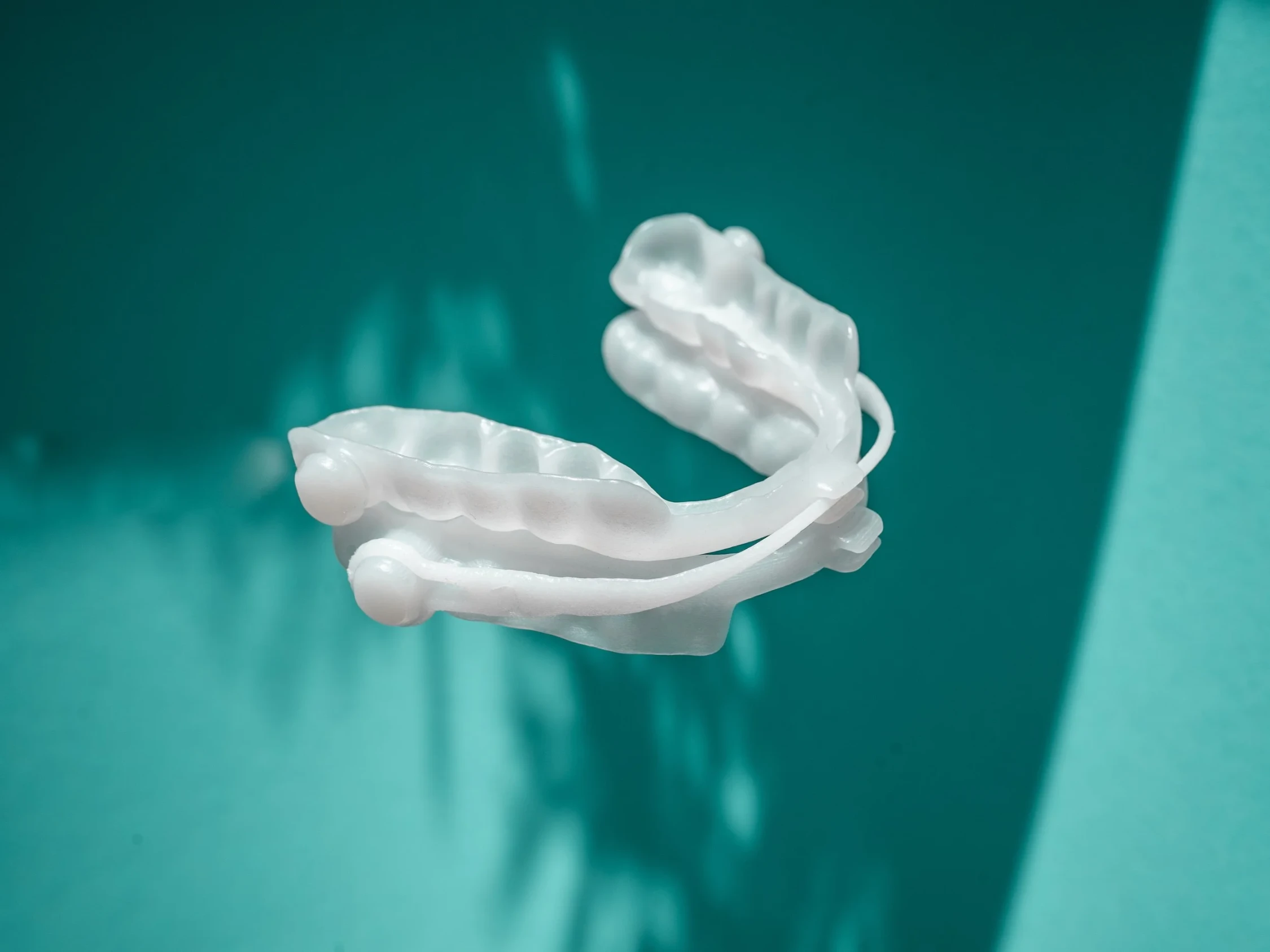
Snoring is the vibrating sound that occurs when air flows past the relaxed soft tissues in the throat. Although often perceived as a nuisance, it is primarily a noise problem.
Obstructive Sleep Apnea Syndrome (OSAS), or OSA, is a more serious condition. In this, the sagging of the throat and tongue muscles leads to a blockade of the airway, causing breathing temporary stops (apnea), defined as a standstill of at least 10 seconds. This can happen dozens of times per hour. The body jerks awake to breathe, leading to disturbed sleep and daytime sleepiness and health risks.
There are two main types: OSAS (caused by physical blockage, most common) and CSAS (Central Sleep Apnea, caused by inadequate control from the brain). OSAS occurs in approximately 4% of men and 2% of women.
Factors that aggravate snoring
Several conditions can constrict the airway or promote muscle weakness:
1. Physical and anatomical factors:
Obesity, where fat accumulation around the neck compresses the airway.
A large tongue, narrow lower jaw, or a long and limp palate.
Nasal problems, such as nasal polyps or a crooked nasal septum, which cause restricted nasal breathing.
Heartburn (reflux), which can irritate and damage the mucous membranes.
2. Lifestyle and External Factors:
Sleeping on the back, allowing the tongue and soft palate to sink back more easily.
Use of alcohol, sleeping pills or tranquilizers, which add muscle weakness.
Smoking, which irritates the mucous membranes in the nasopharynx and throat and causes swelling.
Overtiredness, which causes a natural slackening of the throat muscles.
Diagnosis and Treatment with MRA
OSA is diagnosed by a specialist (ENT physician, pulmonologist or neurologist) based on a sleep study (often a Polygraph). The specialist determines the severity based on the AHI score (Apnea-Hypopnea Index), the number of breaths per hour:
A score of 5 to 15 is a mild form.
A score of 16 to 30 is moderate form.
A score of above 30 is a severe form.
The MRA Treatment
The Mandibular Reposition Device (MRA)., better known as the snoring brace, is an effective solution for mild and moderate OSA (AHI 5-30) and chronic snoring.
The MRA is a custom-made brace that holds the lower jaw forward during sleep, keeping the airway at the back of the throat open. This reduces both snoring and apnea.
Compensation: With a diagnosis of OSA In most cases, the MRA is reimbursed from basic insurance (though with the deductible deducted).
Manufacture: Reimbursement requires a referral from a specialist and the braces must be made by a NVTS-accredited dental sleep specialist.
Here is the abridged and clear text:
## The MRA treatment at Dentist Allessie
Dentist M.J. Allessie has been since 2017 NVTS accredited and has extensive experience with MRA treatments.
You always start with a intake interview. During this consultation, Dentist Allessie assesses the suitability of your teeth for an MRA and gives an estimate of the expected results. Only after this consultation will you decide if you want to start treatment.
Compensation and Fees:
Do you have a referral for an MRA due to OSA (Obstructive Sleep Apnea) from an ENT, Pulmonologist or Neurologist? Then, in most cases, the MRA is reimbursed from the basic package.
Do you want an MRA only against snoring? The costs are then between € 850 and € 950. Sometimes an additional dental insurance reimburses this (partially). There is a warranty period of two years with normal use.
Notice: In some cases, a more extensive sleep study, a PolySomnoGraphy (PSG), is needed, for example, if other sleep disorders such as insomnia are suspected.
To book an MRA appointment with Michiel Allessie, please visit the website www.snoor.nl. He is available there on Fridays.