




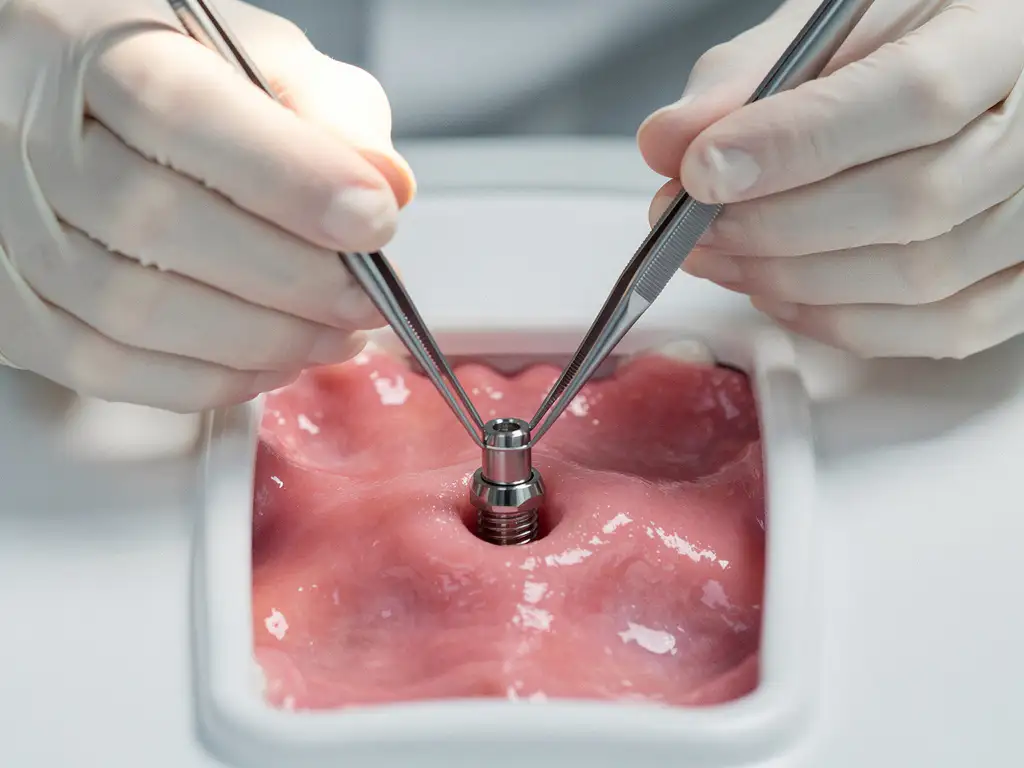
Immediate implants offer the possibility of placing a dental implant immediately after the extraction of a tooth. This treatment is subject to specific conditions regarding bone density, oral health and the condition of the gums. Not everyone is eligible for immediate implants; therefore, a comprehensive assessment is always performed beforehand.
Suitability depends on several factors, including the quality of bone tissue, the cause of tooth loss and overall oral health. A thorough evaluation by an implantologist determines whether immediate implant placement is the best option.
What are immediate implants and how do they work?
Immediate implants are dental implants placed immediately after tooth extraction, during the same treatment session. This method avoids the usual waiting period of three to six months between tooth extraction and implant placement.
The process works because the implant is placed directly into the fresh tooth socket after the tooth is extracted. The implantologist takes advantage of the existing bone structure and places the titanium implant in the hole created after the extraction. This saves time and reduces the number of treatments needed.
The advantage of immediate implants lies in the immediate stabilization of bone tissue. When a tooth is extracted, the surrounding bone begins to recede. By placing an immediate implant, this process is inhibited and the original shape of the gums and jaw are better preserved.
What bone density is needed for immediate implants?
Immediate implants require a bone density of at least type 3 on the Lekholm and Zarb scales, with type 1 representing the hardest bone and type 4 the softest. The bone must be sufficiently firm to keep the implant stable immediately after placement.
Bone density is assessed beforehand with X-rays and sometimes a 3D scan. Soft bone, as often occurs in the maxilla, requires extra caution. In some cases, bone remodeling may be necessary before immediate implant placement is possible.
In addition to density, the thickness of the bone also plays an important role. There must be enough bone tissue around the tooth root to completely surround the implant. Bone that is too thin can lead to visible implant edges or failed integration.
What are the oral health requirements for immediate implant placement?
For immediate implants, the mouth must be completely free of active infection, gingivitis and periodontitis. The gums surrounding the tooth to be treated should be healthy and intact, with no signs of swelling or bleeding.
Good oral hygiene is a prerequisite. Patients must demonstrate adequate maintenance of their teeth and gums. Poor oral hygiene significantly increases the risk of infection around the new implant.
General health factors also come into play. Uncontrolled diabetes, smoking and certain medications can interfere with healing. Patients who smoke have an increased risk of complications and possibly a lower success rate with immediate implants.
When are immediate implants not appropriate?
Immediate implants are not suitable in cases of active infections around the tooth root, insufficient bone volume or when the tooth socket is damaged by trauma or long-term infection. This treatment is also not recommended in patients with uncontrolled diabetes or heavy smokers.
Specific situations where immediate implants are avoided are large cysts or abscesses around the tooth root. These infections must heal completely before implant placement can safely take place. The healing process may take several months.
Patients with bruxism, or teeth grinding and clenching, often do not qualify for immediate implants. The additional forces applied to the implant can interfere with integration with the bone. First, the grinding or clenching must be treated.
Anatomical constraints may also play a role. When there is too little space between the roots of neighboring teeth or when the implant would be too close to important structures, such as nerves, conventional implant placement is chosen after a healing period.
How is your suitability for immediate implants determined?
The suitability for immediate implants is determined by a comprehensive clinical evaluation, X-ray examination and often a 3D scan of the jaw. The implantologist assesses bone density, tooth root condition and overall oral health during an intake interview.
The evaluation process begins with a thorough inspection of the tooth to be treated and the surrounding tissue. Color photographs and digital models provide a complete picture of the situation. Special attention is paid to the intactness of the tooth walls and the presence of infections.
Your medical history will also be discussed during the consultation. Certain medications, such as blood thinners or anti- osteoporosis drugs, may affect treatment. Lifestyle habits, such as smoking, are also included in the assessment.
At Team Tandartsen, we evaluate each patient individually for suitability for immediate implants. Our experienced team can often a fixed bridge on implants realized within one day. In the morning we place the implants and in the afternoon we attach the final bridge. This special option provides a solution for people who do not want to wait long for their new teeth. We understand that a beautiful smile is important for your self-confidence and daily life.
Frequently Asked Questions
How long does healing take after immediate implant placement?
De volledige genezing van immediate implantaten duurt doorgaans 3 tot 6 maanden, waarbij het implantaat volledig integreert met het botweefsel. De eerste weken zijn cruciaal voor de genezing – u kunt lichte zwelling en gevoeligheid verwachten die geleidelijk afneemt. Gedurende de genezingsperiode krijgt u tijdelijke kronen of een tijdelijke prothese om esthetiek en functie te behouden.
What is the cost of immediate implants compared to regular implants?
The cost of immediate implants depends on several factors such as the number of implants, the materials used and the complexity of the treatment. Although fewer treatment sessions are often required than with regular implants, the total cost varies by individual situation. For an exact quote, we recommend a personal consultation in which your specific situation is assessed. Many dental practices offer payment plans to spread the cost over several months.
Can I eat and drink normally immediately after treatment?
For the first 24-48 hours after immediate implant placement, it is important to eat only soft, cold foods such as yogurt, smoothies and soup. Avoid hot drinks, alcohol and hard foods for the first week. After about a week, you can gradually transition to normal foods, but avoid chewing on the treated side for the first month.
What happens if the immediate implant does not integrate properly?
Although rare, an immediate implant can fail due to infection, insufficient bone integration or overuse. In this case, the implant is removed and the bone is given time to heal. After 2-3 months, a new implant can be placed using the conventional method. Your implantologist closely monitors healing during regular checkup appointments to identify any problems early.
How do I maintain immediate implants during the healing period?
Good oral hygiene is essential for successful healing of immediate implants. Brush gently with a soft toothbrush and use an antibacterial mouthwash as prescribed by your dentist. Avoid using toothpicks or water flosser around the implant during the first few weeks. Smoking, alcohol and strenuous physical activity may interfere with healing and should be avoided.
Can I get immediate implants if I wear partial dentures?
Yes, immediate implants can often be an excellent replacement for partial dentures, provided you meet the medical requirements. The implantologist will evaluate whether there is enough healthy bone tissue present and whether the surrounding teeth and gums are in good condition. In many cases, multiple immediate implants can be placed simultaneously to create a stable, fixed solution that is much more comfortable than removable dentures.
What are the main risks with immediate implants?
De hoofdrisico’s bij immediate implantaten zijn infectie, implantaatverlies door onvoldoende primaire stabiliteit, en esthetische problemen door terugtrekking van het tandvlees. Het risico op complicaties is iets hoger dan bij conventionele implantaten, maar blijft laag bij zorgvuldige patiëntenselectie en ervaren behandelaars. Factoren zoals roken, slechte mondhygiëne en ongecontroleerde diabetes verhogen deze risico’s aanzienlijk.